

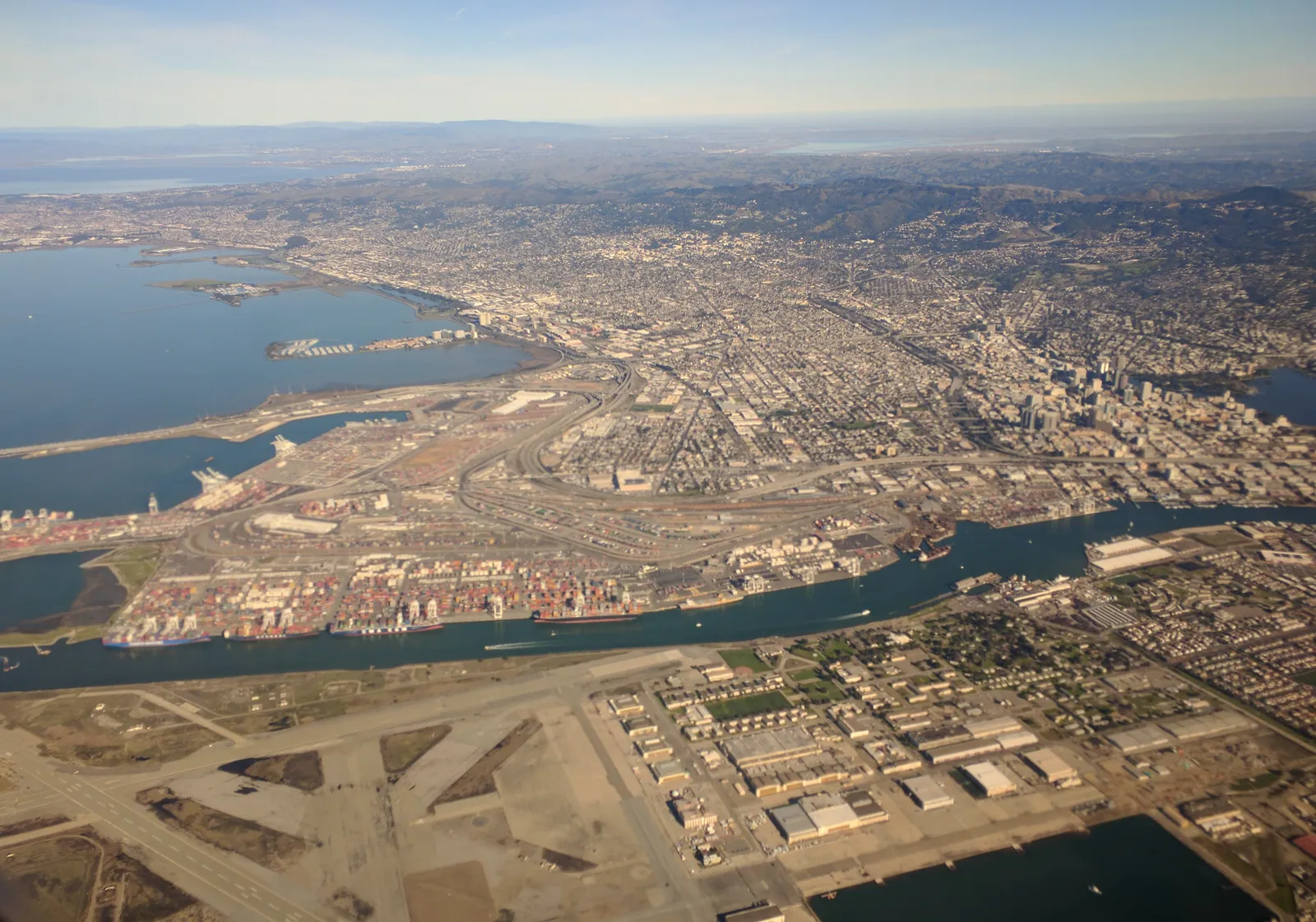
A drayage invoice lands for one import container out of Oakland. Six lines: the base move, fuel, two chassis splits at $125 apiece, a pre-pull, and four days of yard storage. Someone checks the base move against the quoted rate, finds it right, and codes the whole invoice to freight expense.
Drayage accessorials are what a carrier adds on top of that base move: hunting down a chassis, pulling the box out early, parking it in the yard, sending a driver who came back empty. Each one asserts that something happened at a particular place and time, and terminals and chassis pools record those events. The assertion and the record almost never end up side by side.
The line below the base rate has no referee
Ocean charges arrive with rules attached. 46 CFR part 541 tells an ocean carrier, NVOCC or marine terminal operator what a demurrage or detention invoice has to contain and how long it has to issue it. Your drayman's chassis split fee sits outside all of that. It's neither demurrage nor detention, and the company billing it isn't a billing party under the rule.
What governs it is your drayage contract plus whatever accessorial schedule the provider had published that week. Plenty of those contracts are a lane rate sheet with a line reading "accessorials per provider tariff," which means agreeing to a document the other side can rewrite. Audit these lines first. The base rate is the one number both parties already put in writing.
The direction of travel favours the billing party. On September 23, 2025 the D.C. Circuit set aside 46 CFR 541.4 in World Shipping Council v. FMC, which had barred ocean carriers from invoicing motor carriers for demurrage and detention. Per diem that now lands on your drayman reaches you a week later with a handling fee on top.
Every drayage accessorial names a record somebody holds
Ask what each line is claiming happened. The answer is almost always an event with a timestamp and an owner.
| Charge | What the line asserts | The record that settles it |
|---|---|---|
| Chassis split | A chassis came from a second location | Bare chassis gate transaction, with time and chassis number |
| Pre-pull | The loaded box left the terminal early | Gate-out time against the last free day on the availability notice |
| Yard storage | The box sat on the provider's lot for the days billed | Gate-out, the delivery POD, and your contracted free days |
| Chassis usage | The chassis was on hire for those days | Pool invoice naming the chassis and its interchange dates |
| Traffic Mitigation Fee | A loaded, non-exempt box crossed an LA or Long Beach gate | Gate transaction and the container's loaded or empty status |
Four of those five records sit with somebody other than the company that invoiced you. Asking a drayman to justify his own billing is a negotiation. Pulling the terminal's gate transaction is a lookup.
Chassis splits come in pairs by default
Rhenus publishes a standard accessorial schedule for its US work that lists a chassis split at $125 and notes that two normally apply. That default is the thing worth testing. Two splits means two bare chassis movements, one to get a chassis under the box and one to return it somewhere the container isn't. A wheeled terminal, a street turn against an outbound export, or a provider running its own fleet there all mean no second stop.
The split and the chassis day rate are separate charges
One pays for the trip, the other for the equipment, and a markup rides between them without ever being named. DCLI publishes daily rates by market: effective July 1, 2026, a standard marine chassis runs $47.50 a day all in across the Pacific Southwest, $45.00 in the Northeast outside Baltimore, and $28.55 in the Southeast. A flat $45 a day nationwide is Northeast money for Memphis work, defensible as a negotiated rate and indefensible as the pass-through the invoice calls it.
DCLI's published rates exclude gate fees, so a gate fee next to a chassis day rate isn't automatically a duplicate. It also charges $250 when a lightweight Houston chassis is dropped anywhere but the 610 Yard, and the same on short-term pool equipment returned to the wrong location. A bare $250 line is usually that, usually correct, and usually your driver's decision rather than yours.
A pre-pull has to beat the last free day
A pre-pull takes the loaded box off the terminal before you're ready and parks it on the drayman's lot. The purpose is to stop the demurrage clock, so the test is arithmetic: the terminal gate-out against the last free day on the carrier's availability notice.
Rhenus lists the pre-pull at $150 and yard storage at $50 a day. Four days behind a $150 pull is $350 before the equipment, and the equipment matters: a box parked in a yard sits on a chassis you're renting by the day at something near the rates above. Pull on the last free day and the math beats most import demurrage tariffs. Pull three days early and you've bought storage and chassis days against charges that hadn't started.
The version we see most often runs the other way. The pre-pull gated out after free time had expired, so one container generates a pre-pull fee, yard storage, chassis days and demurrage at once. Those charges come from three companies and land in three different weeks. The container number is in a different field on each document.
Then there's who asked for it. A pre-pull your coordinator approved on the phone at four in the afternoon is a cost you accepted. A pre-pull the dispatcher ordered because he had a driver idle on Thursday is a provider managing his own fleet. Both arrive as the same $150 line, with no approval attached.
Yard storage days have an owner
Count from the gate-out to the POD, subtract your contracted free days, and you have the billable number. Then ask who held the box on each of those days. A consignee with no dock appointment owns those days outright. A provider short of drivers does not, and neither does a plant that closed for a holiday the provider had on its own calendar. Storage caused by the provider's own capacity belongs to the provider, and most drayage contracts never say so.
The fees that were never the drayman's to set
Some lines are pass-throughs with a published number behind them. The Traffic Mitigation Fee at Los Angeles and Long Beach went to $40.63 per TEU and $81.26 for all other sizes on August 1, 2026, a 4.77 percent increase the West Coast MTO Agreement announced on July 1. Its announcement exempts empty containers, empty chassis, bobtail trucks, Alameda Corridor transits and transshipment cargo. A TMF on an empty return is wrong on the face of the document, and it won't be the only one that month.
Chassis choice matters too. The FMC opened an investigation on January 26, 2026 into whether ocean carriers restrict truckers and shippers from choosing a chassis provider, citing 46 U.S.C. 41102(c). It had already held in Intermodal Motor Carriers Conference v. OCEMA (Docket 20-14, February 13, 2024) that requiring use of only the carrier-designated provider is unreasonable. On merchant haulage, the chassis day rate you're paying may belong to a provider nobody could lawfully have obliged you to use.
Where this lands in the audit
None of this is difficult once the records sit together, and they never do. Automated freight invoice audit takes the invoice apart line by line, asks each charge for the record behind it, and holds payment on the lines that can't produce one. Shipment exception tracking is where the gate and availability events come from. Putting a cause against every billed day, which we wrote about in attributing demurrage days to who caused them, applies one layer down here, and compounds fastest in freight audit for retail importers, where the same lane runs weekly through the same provider.
Start with the splits. Take last month's drayage invoices, pull every line billed as a chassis split, and ask the provider for the gate transaction behind each one: location, chassis number, timestamp. The ones who ask what you need it for are telling you something.
Book a walkthrough to see Penny check chassis splits, pre-pulls and yard storage days against your own gate and pool records.
Frequently asked questions
- What is a chassis split fee in drayage?
- A chassis split is billed when the terminal cannot release a chassis with the container, so the driver collects one from a separate pool location or depot before returning for the box. Published schedules put it around $125 per split, and two splits are often applied to a single move because the chassis has to go back as well. The event is recorded as a bare chassis gate transaction, so the charge can be checked against a timestamp and a chassis number.
- When is a pre-pull actually worth paying for?
- A pre-pull earns its keep only when the container leaves the terminal on or before the last free day, and the demurrage it avoids exceeds the pre-pull fee plus the yard storage and chassis days that follow. Compare the terminal gate-out timestamp with the last free day on the carrier's availability notice. If the box gated out after free time had expired, you are paying for the pre-pull and the demurrage both.
- Who pays for yard storage when a container sits at the drayage provider's yard?
- It depends on who could have ended the day. Days caused by a consignee with no dock appointment belong to the consignee. Days caused by the provider having no driver, or a chassis pool having no equipment to interchange, belong to the provider. The drayage contract should say this in writing rather than leaving it to a case-by-case argument after the invoice arrives.
- Does the FMC demurrage and detention billing rule cover drayage accessorials?
- No. 46 CFR part 541 sets the invoice contents and timelines for demurrage and detention billed by ocean carriers, NVOCCs and marine terminal operators. A chassis split, pre-pull or yard storage charge from a drayage carrier falls outside it. The only governing documents are your drayage contract and the provider's published accessorial schedule.
See it on your freight
Stop Overpaying On Freight Invoices
Penny checks every invoice against your contracts and what the shipment actually did, then disputes what doesn’t hold up. You pay 30% of what she saves you, and nothing if she saves nothing.
Found this useful? Share it with your team.
Share on LinkedIn