

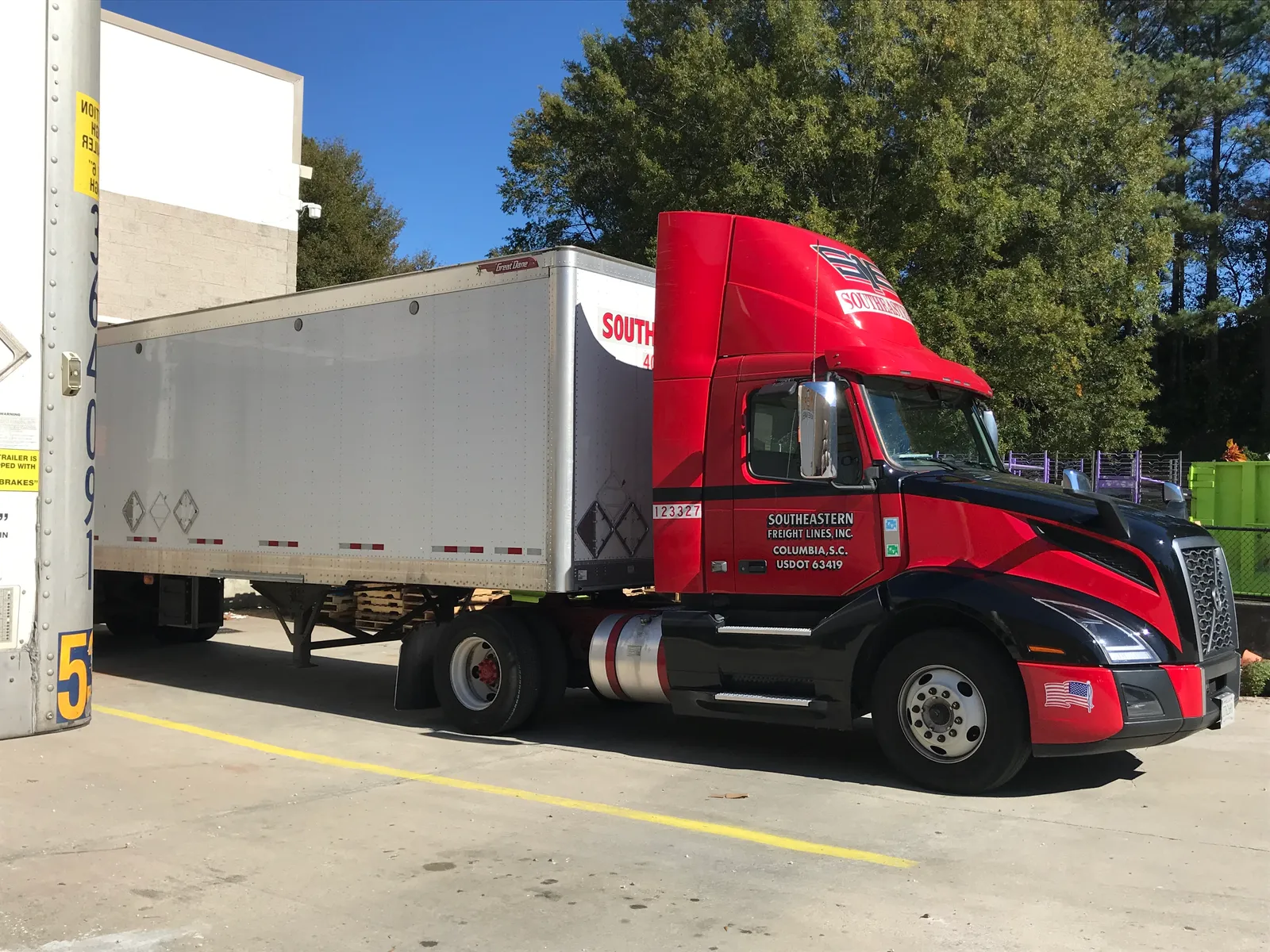
An LTL invoice lands at $1,847. Everything on it checks out except one line: a $210 reweigh on a shipment your own warehouse scaled on the way out the door. AP pays $1,637, the remittance file carries the invoice number and nothing else, and your side treats the matter as closed.
It isn't closed at the carrier. A short pay with no explanation attached reaches their AR clerk as $210 missing against invoice 4471082, no reason and no document. She can't write it off on her own authority, so it goes to a deduction bucket and ages. Six weeks later a collections email arrives about an unpaid balance, and nobody at your desk remembers which line it was.
Paying less than the invoiced amount because one charge doesn't hold up is the fastest dispute mechanism in domestic freight, provided the evidence travels with the payment. Without it you've handed the carrier an unexplained deduction, and carriers have a process for those.
What a short pay looks like from the carrier's AR desk
Cash arrives against an invoice and doesn't match it. What the clerk does next depends entirely on what came with the payment.
| What you send with the payment | What the AR clerk can do with it | Where it is in 60 days |
|---|---|---|
| Short amount, invoice number only | Open a balance and route it to collections | An aged receivable and an email you can't answer |
| Short amount plus a reason code | Identify the line, then ask her pricing team about it | Either resolved or rebilled, depending on who follows up |
| Short amount, the line, and the document | Hand it to pricing as a decided question | Credited, or declined with a reason you can argue with |
Your $210 never reaches anyone who knows what a reweigh is. It lands on an aged balance report that a collections rep works by size and age, and small balances get worked last. By the time it reaches someone who could pull the weight certificate, the analyst who priced the lane has changed desks.
The rebill is how most short pays get paid anyway
A carrier that can't resolve a deduction rebills it. The $210 comes back under a new invoice number, usually with the original PRO sitting in a reference field your matching logic doesn't read. It arrives small and unremarkable, and it clears, because small invoices clear. It's the sharpest version of the problem we described in freight invoices that are duplicates without looking like duplicates. You disputed the charge, won it by default, and paid it four months later under a number nobody connected to the first one.
After the money leaves, you're on somebody else's clock
Recovering a charge you already paid means an overcharge claim, and 49 CFR part 378 sets out how that runs for interstate motor carriage. Section 378.4 requires the freight bill to accompany an overcharge claim. Section 378.7 gives the carrier 30 days to acknowledge the claim in writing. Section 378.8 gives it 60 days from receipt to pay, decline or settle, extendable only by written agreement for extenuating circumstances.
Three months of regulated correspondence to recover $210 you were holding in your hand a few weeks earlier.
The clocks that actually bind you
Under 49 U.S.C. 13710(a)(3)(B) you have 180 days from receiving a bill to contest it. Miss that window and you lose the right to contest the charge at all. The same statute at (a)(3)(A) gives the carrier 180 days from the original bill to issue additional charges, which is the window the balance-due rebills live inside. 49 U.S.C. 14705(b) then allows 18 months to begin a civil action for overcharges. A written contract can waive these under 49 U.S.C. 14101(b), and contract carriage routinely does, so read your agreement before relying on the statutory numbers.
Ocean freight already wrote the rule truckload never got. Under 46 CFR 541.8 a billing party must give the billed party at least 30 calendar days from invoice issuance to request mitigation, refund or waiver, then attempt to resolve it within 30 days. No motor carrier owes you that. On a truckload invoice the dispute window is whatever your contract names, and where it names nothing, it's the one you take.
What goes in the packet
A short pay that gets answered carries five things, and all five travel with the payment, not in a separate email somebody has to connect to it later.
- The carrier's own references: invoice number, PRO, and the amount withheld to the cent.
- The charge named the way their tariff names it. Nobody should spend a day working out whether you mean reweigh or reclass.
- The document that contradicts the line. A certified scale ticket for a reweigh. Geofence arrival and departure for detention, which we broke down in what a detention charge has to prove. The signed receipt for a lumper.
- What you say is owed, and why, in one sentence.
- A person at your company who answers email.
If you settle by EDI, the 824 application advice exists to reject a 210 back to the carrier with a reason attached. Plenty of shippers never switch it on and send a short 820 instead, which puts the reason nowhere.
The email, roughly
Short and dull works better than argued. "Invoice 4471082, PRO 884-20915. We paid $1,637.00 of $1,847.00 today. We are holding $210.00 against the reweigh line. Our certified scale ticket is attached: 1,840 lb, 11/04, Grand Rapids dock scale 7, seal 88214. Your reweigh shows 2,310 lb and names no scale. Send the reweigh certificate and we'll release the $210 the day it arrives." Then a name and a direct address.
Pay the rest the same day
Pay the undisputed portion on the day you raise the dispute, not on the day terms allow. Hold $1,637 for three more weeks because you're arguing about $210 and the carrier starts treating the whole account as a payment problem, which turns a pricing question into a credit question. Collections sorts by total unpaid, so leave nothing else unpaid behind the dispute.
The harder discipline is never withholding more than the disputed line. We see full invoices held over one accessorial more often than we'd expect, usually because the AP system can only approve or reject a whole document. That's a systems limitation reaching your carrier as a judgment about their billing.
One more position worth holding: if you can't explain the short pay in six weeks without re-researching it, pay it now. An undocumented deduction is money you will spend twice, once on the dispute and once on the rebill.
Check who owns the invoice before you withhold
Small carriers factor. If a carrier assigned its receivables and you got a notice of assignment, UCC Article 9-406 generally means you discharge the debt only by paying the assignee, and paying the carrier instead can leave you owing the factor the same money. Article 9 is enacted state by state, so check your own, but the direction is consistent.
The split matters here. The factor holds the receivable and has never seen your scale ticket; the carrier knows the reweigh and no longer owns the money. Pay where the notice says, dispute with the carrier's billing contact, and tell each that you did both. Under 9-406(c) you can ask the assignee for reasonable proof of the assignment if the notice looks thin.
The step teams skip is checking at all. The notice arrived once, as a PDF, eighteen months ago, to an inbox that wasn't AP's.
Where the hold has to happen
All of this assumes somebody caught the line before the payment file went out, and that's the part that breaks. Automated freight invoice audit reads the invoice line by line before payment, holds the charge that can't produce its record, releases the rest, and drafts the dispute with the document attached. Shipment exception tracking supplies the arrival and departure events behind a detention hold. The pattern compounds worst in freight audit for manufacturers, where the same reweigh pattern runs the same lane weekly and gets settled one invoice at a time.
Pull the deduction aging your three largest carriers say you still owe. Read the oldest ten and count how many you can still explain. Then check whether any came back as a new invoice number and got paid.
Book a walkthrough to see Penny hold one line, release the rest the same day, and send the carrier the document behind the short pay.
Frequently asked questions
- Is it legal to short pay a freight invoice?
- Withholding a disputed charge is governed first by your transportation agreement, so read what it says about disputes and payment terms before you withhold anything. For interstate motor carriage with no overriding contract language, 49 U.S.C. 13710(a)(3)(B) gives you 180 days from receiving a bill to contest it, and the STB has treated notice given by any means that reaches the carrier as sufficient. A contract can waive these federal provisions under 49 U.S.C. 14101(b), which many contracts do.
- How long do I have to dispute a freight bill?
- On interstate truck freight the statutory window is 180 days from receipt of the bill under 49 U.S.C. 13710(a)(3)(B), and missing it costs you the right to contest the charge. A civil action to recover overcharges has to begin within 18 months under 49 U.S.C. 14705(b). Ocean demurrage and detention is different: 46 CFR 541.8 requires the billing party to allow at least 30 calendar days from invoice issuance for a mitigation, refund or waiver request.
- What should I send with a short pay so the carrier can act on it?
- Send the invoice number, the PRO, the exact amount withheld, the charge named as their tariff names it, and the document that contradicts the line. Say what you believe is owed and name a person who answers email. If you settle by EDI, the 824 application advice is the transaction designed to reject a 210 invoice back with a reason, rather than sending a short 820 that explains nothing.
- What happens if the carrier has factored the invoice I want to short pay?
- Once you have received a notice of assignment, UCC Article 9-406 generally means you discharge the debt only by paying the factor, and paying the carrier instead can leave you liable to the factor for the same amount. Article 9 is enacted state by state, so check your state's version. Practically, route the payment to the factor and the dispute to the carrier's billing contact, and tell each one you have done both.
See it on your freight
Stop Overpaying On Freight Invoices
Penny checks every invoice against your contracts and what the shipment actually did, then disputes what doesn’t hold up. You pay 30% of what she saves you, and nothing if she saves nothing.
Found this useful? Share it with your team.
Share on LinkedIn