

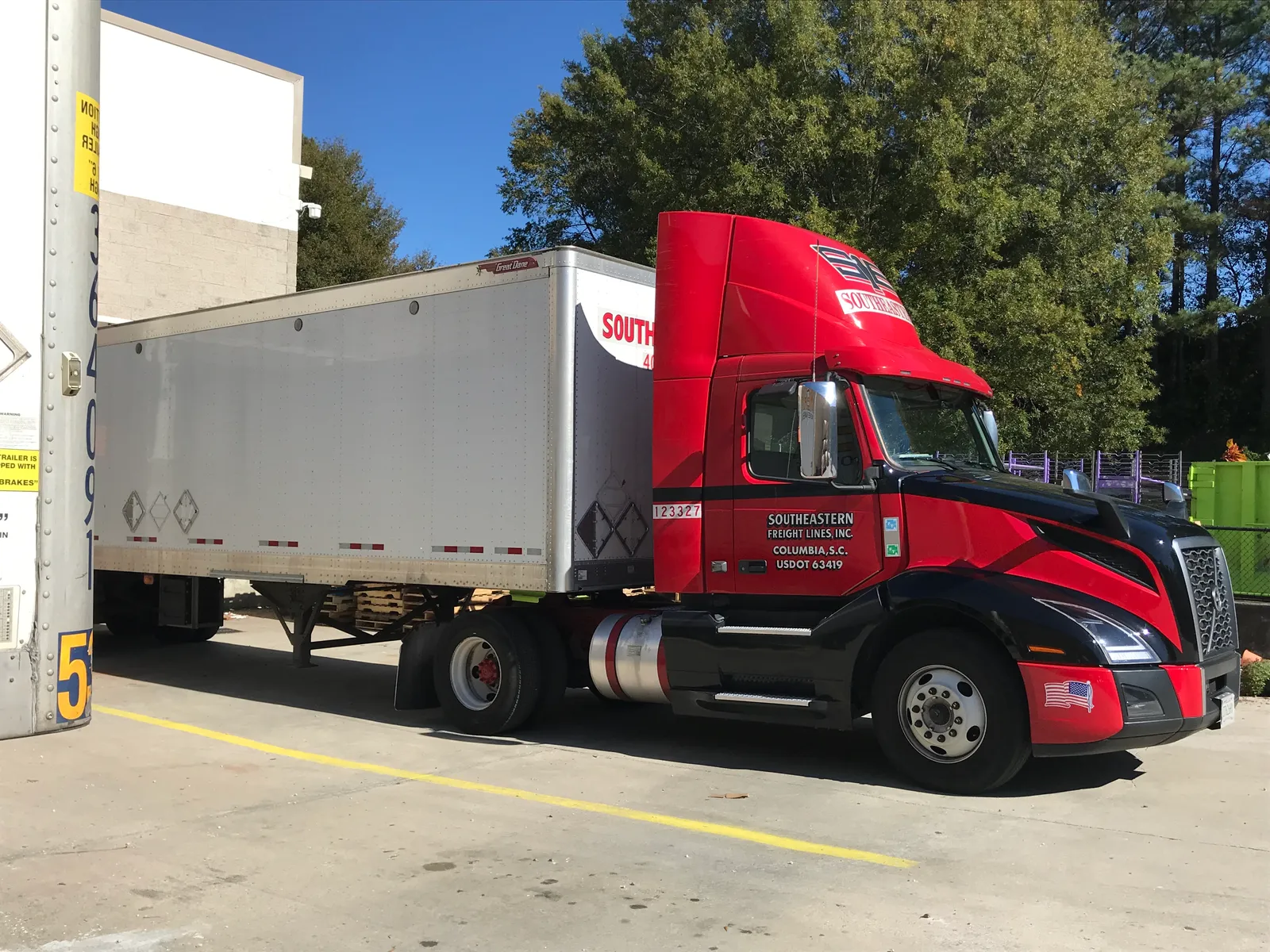
A $400 line coded TONU arrives on a truckload invoice. Your Memphis plant cancelled that load at 16:40 on a Tuesday, and nobody in accounts payable can say whether a tractor ever left for the site.
TONU is truck ordered not used: the carrier's claim that you ordered equipment, the equipment got committed to you, and you released it late enough that the carrier lost the revenue. The amounts are small, so the lines clear. Detention at least gets argued about. A TONU charge usually doesn't, because nothing on the invoice invites a question.
The tariff already defines a valid TONU charge
Carriers wrote down the conditions themselves, and the tariffs are public.
Xpress Global Systems' Rules Tariff 3500 handles cancelled pickups and TONU together in Item 730. An LTL pickup "that is attempted, but canceled without the tender of freight to XGS" draws a cancelled pickup charge of $45.00 per shipment. A truckload or volume-quoted pickup "that is attempted but cancelled without the tender of the freight" draws a TONU fee of $400.00. The word carrying both sentences is attempted.
TTD West's Item 49 is blunter about it. The charge applies when "equipment is ordered and cancelled after the unit has been dispatched," priced at $1.75 per mile from last destination to designated pick-up, with a minimum of $45.50 per unit on LTL and $250.00 on truckload.
The two amounts have nothing in common. The condition behind them is identical. Something had to happen in the physical world before the charge exists: a unit dispatched, or a pickup attempted. If the tractor was still sitting at the terminal when your planner called it off, neither tariff supports the line.
Ask for the dispatch record
So the first message on a disputed TONU asks for the dispatch timestamp and the tractor's position history covering the two hours before the cancellation. Carriers hold that data already; it comes from the same dispatch and ELD stack that generated the invoice. When a carrier won't produce it on a $400 line, the line rarely survives a second ask.
If your shipment exception and milestone tracking already carries carrier-reported dispatch and departure events, you can often answer the question without asking the carrier.
Who released the truck, and what time it was where
On brokered freight the cutoff isn't in a tariff anywhere. It sits on the rate confirmation as a round number: four hours before scheduled pickup, six hours, or the vaguer "prior to dispatch." Read that paragraph before you read the amount, because on a lot of rate cons it isn't there and the broker is billing a figure nobody agreed to.
The most common failure here is a timestamp nobody converted. Say the rate con requires six hours' notice on an 06:00 pickup at a Fresno DC. The planner sends the cancellation at 23:40 Pacific, clearing the window with twenty minutes to spare. The broker's mail system stamps it 01:40 Central, the clerk compares 01:40 against an 06:00 pickup, reads four hours and twenty minutes of notice, and approves the charge.
Then there's the question of whose side the cancellation came from. A load that collapsed because the carrier couldn't cover it isn't a TONU. Neither is a driver who ran out of hours before reaching you, or a tractor that broke down between its last delivery and your gate. The cancellation originated on the carrier's side in every one of those, and the invoice won't say so.
A carrier that genuinely held a truck for you and ate the cancellation should be paid that week, in full, with no dispute letter. That's an unpopular thing to say in a freight audit shop and we'll say it anyway: fighting a TONU on a truck that actually rolled costs more in goodwill and capacity than the $400 ever returns. The money worth chasing is in the lines where no tractor moved, and in the lines that were never TONU to begin with.
Four things that happen to a truck, one lookalike code
TONU, dry run, detention and layover are four different events billed under codes that resemble each other. We went through that mapping problem in the eight codes carriers use for one waiting charge. TONU has a smaller version of it, arriving as TNU, DRYRUN, CANC, or free text reading "load cancelled by shipper."
| Charge | What happened to the truck | What the carrier should be able to show |
|---|---|---|
| TONU | Dispatched, then released before any freight was tendered | Dispatch time and tractor position at cancellation |
| Dry run | Reached the shipper and found nothing to load | Arrival event, gate log or driver note |
| Detention | Arrived, waited past free time, then worked | Arrival and departure times, the governing free time clause |
| Layover | Held overnight after the appointment moved past the driver's clock | Appointment history and the hours-of-service record |
The detention row runs on the same evidence discipline we laid out in what a detention charge has to prove. TONU is the easier of the two: one timestamp to establish instead of a pair.
The same cancellation, billed twice
A truck that arrived, sat three hours and got sent away can come back as detention from one carrier, as a dry run from another, and once in a while as detention plus a TONU from the same carrier on invoices thirty days apart. Pick one. Our rule is that the charge follows the furthest the truck got: if it reached your gate, it isn't a TONU, whatever the code on the line says.
The TONU on a load that moved the next morning
This one survives most audits intact. A load gets cancelled Tuesday at 16:40. Planning rebooks it Wednesday for 08:00, same origin, same destination, same carrier, new load number. The carrier bills TONU on the Tuesday load and full linehaul on the Wednesday one.
Sometimes that's correct, when a unit was dispatched Tuesday and reassigned elsewhere. Often enough the same tractor sat in the same yard overnight and the only thing lost was a line on a dispatch board.
Reading one invoice will never find it. The check is a join across invoices: carrier, origin, destination, equipment type, and a 72-hour window around the cancelled date. Where a matching load turns up, ask for the tractor number on both. Matching tractor numbers on consecutive days ends the conversation quickly.
Job-site deliveries throw off more of these than any other freight we look at. A site that isn't ready at 07:00 cancels, the material goes out the next morning, and the cancellation charge rides along behind it. That pattern is most of what freight audit for construction shippers turns up.
What Penny does with a TONU line
Penny runs pre-payment freight invoice audit on every invoice, so a cancellation charge gets opened before the payment file closes instead of in a recovery sweep two quarters later. She pulls the governing clause, whether that's a rules tariff item or the TONU paragraph on the rate confirmation. She converts the cancellation timestamp into the zone the cutoff is written in. She looks for a dispatch event ahead of the cancellation, and for a matching load that moved within three days.
A charge that checks out gets approved and no one ever looks at it. The ones that fail go back with the item number quoted, both timestamps converted and labelled, and the dispatch gap stated in minutes. That email runs about three sentences. Carriers answer it a lot faster than they answer a short pay with no explanation attached.
There's a second question underneath the billing one, and it points at your own side: which person or site released the truck, and whether they knew the release carried a price. A TONU is a line item in AP and a planning signal everywhere else, and routing it back to the site or the planner who cancelled does more for next quarter than winning the dispute will.
Start with the column you don't have
Take the cancellation charges you paid over the last two quarters and sort them by who cancelled. Most AP systems can't produce that view, because nobody recorded who cancelled. If the column comes back empty, the carrier isn't the place to start.
Book a walkthrough and we'll run your last quarter of TONU and dry run lines against the tariff items and rate confirmations that govern them.
Frequently asked questions
- What is a TONU charge in trucking?
- TONU stands for truck ordered not used. It is a carrier charge for equipment that was committed to your load and then released before any freight was tendered. Amounts are set by contract or tariff rather than by regulation, and they vary widely. Xpress Global Systems' Rules Tariff 3500 sets $400.00 for truckload and volume shipments under Item 730, while TTD West's Item 49 charges $1.75 per mile from the last destination to the designated pickup with a $250.00 truckload minimum.
- When can a carrier legitimately bill a TONU?
- The common condition across published tariffs is that equipment had to be dispatched, or a pickup actually attempted, before the cancellation reached the carrier. TTD West's Item 49 applies when equipment is ordered and cancelled after the unit has been dispatched. XGS Item 730 applies to a pickup that is attempted but cancelled without the tender of freight. On brokered loads the trigger and the notice window live on the rate confirmation instead, so check that document first.
- How do you dispute a TONU charge?
- Ask the carrier for the dispatch timestamp and the tractor's position history for the two hours before your cancellation went out. Quote the tariff item or the rate confirmation clause that sets the notice window, and convert your cancellation timestamp into the time zone that clause is written in. If the equipment was never dispatched, or the cancellation beat the cutoff once the zones are reconciled, the charge does not stand.
- What is the difference between a TONU and a dry run?
- A TONU covers a truck that was dispatched and then released before it ever loaded. A dry run covers a truck that reached the shipper and found nothing available to load. The charge should follow how far the truck actually got, and the same event should not be billed as both. Watch for a dry run arriving as detention on a second invoice weeks later.
See it on your freight
Stop Overpaying On Freight Invoices
Penny checks every invoice against your contracts and what the shipment actually did, then disputes what doesn’t hold up. You pay 30% of what she saves you, and nothing if she saves nothing.
Found this useful? Share it with your team.
Share on LinkedIn